As, the impacts of human-induced climate change reverberate and reshape the landscapes and livelihoods of communities across the world, pro-environmental action has become a matter of urgency. We Will Grow is an acclaimed short documentary unfolding in Rhodes- a Greek island and tourist destination- that was immensely hit by wildfires during the previous years. In this interview with its filmmaker Areti Pagoulatou, we take Rhodes, as a point of departure to discuss themes around collective responsibility in addressing the climate crisis, the strength of community and animal liberation, to name a few.
TW: Interview might contain topics of animal abuse that some people might find distressing.
Please introduce yourself and the team and tell us a few words about your motives for making this documentary?
My name is Areti Pagoulatou and I am a filmmaker from Rhodes, Greece. I grew up on the island and came to the UK as an immigrant during the economic crisis. I studied filmmaking at the University of Westminster and graduated last year.
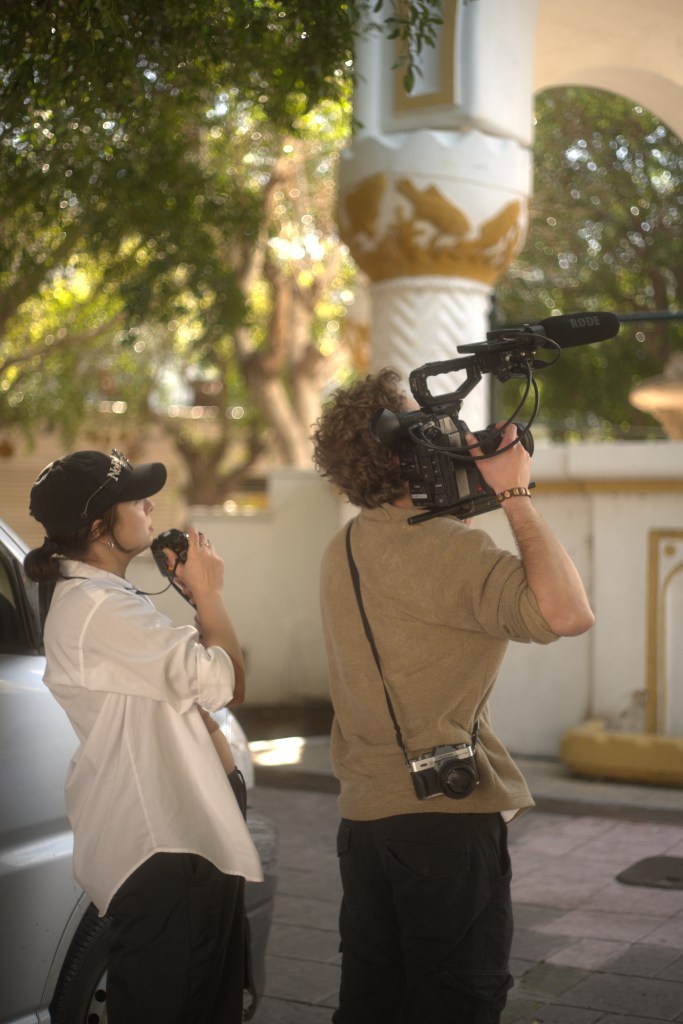
We Will Grow came out of necessity; I was just about to start my final year at university when the wildfires took place. So for me, at that point, there was nothing more important that I wanted to discuss as a filmmaker and as a political being. And as the wildfires were a lived experience, I saw the impact they had on my community.
So, there was a real urgency to talk about this as soon as I possibly could. Luckily, the university that I went to really encouraged us to create work that was integral to us and we were given guidance and funding to do the films that we wanted to do. So, I took the opportunity, pitched it ,and luckily it was one of these projects selected for production.
What is the main theme of the documentary? (No spoilers please)
The main theme of the documentary is community. What we witnessed and what we experienced during the wildfires in Rhodes was very unique from that perspective. During those 11 days that the fires lasted, there was nothing that was more important for us living on the island; we gave up our jobs, and our time, and joined this collective effort to see this through.
The catastrophe that took place in Rhodes is of an immense scale and it was really overwhelming to see how we were able to work together, collectively, when the circumstances demanded us to do so and when it truly mattered as there was no alternative. It’s very weird to describe it but at the same time so unique to our experience, and something that we are not only looking back to but we have also learned from it and want to apply it for everything that we do from now onwards.
So the main theme of the documentary is community, collectivism, working together and actually taking action towards protecting our environment and our island.
Wildfires in Greece have been on the rise over the past few years. In many cases, protected areas are losing their status, and there are discussions about arsons (deliberate or accidental), wind farms interests, but also the impact of climate change. What is your opinion on this? Do wildfires have a single cause, or are there multiple factors at play?
I do not want to talk about arson, deliberate or accidental, because this is something that plays quite a lot in the collective consciousness and it leads to ideologies that I do not agree with as well as conspiracy theories to rise.
We’ve seen this in the past, especially maybe like 15- 20 years ago before the crisis and there was always a conversation throughout the country that the wildfires were deliberate in order for corporations to build resorts or to install wind turbines. So I can’t say that it is something that I can exclude. It’s not something that we shouldn’t take into account. I believe that it has happened to a certain extent, however, we should not deflect from what the biggest factors currently are; climate crisis and state negligence.
In Greece, we know that nothing really works. There’s no maintenance in power lines, there are no preventative measures in place, there is not enough firefighting personnel in the country and the equipment they have is usually very old and outdated but also not effective on the mountainous terrain, there are no evacuation procedures, emergency housing and planning, and definitely not sufficient aid to those affected or those who have lost property.
And the state, either on a national or on a regional level, needs to make sure that they’re not negligent on their part and that they’re taking preventative measures to protect us from wildfires and natural disasters, but they don’t.
With that said, however, we need to view any natural disaster of this scale from a holistic perspective. It’s not just a state’s responsibility. It’s our collective responsibility. It’s our collective and individual responsibility to protect what we have and what we love and what essentially feeds us.
One of the documentary contributors, in his interview said that when they we were going to the forests, they were seeing so much trash, broken glass, electronic devices, etc. The locals are responsible for this. There is no education when it comes to littering which we are doing to a very big extent and no one is enforcing any rules when it comes to it. A lot of people do not respect the environment so in a sense, we are also partly responsible for it.
And of course, we also need to mention how the state is prioritising the tourism industry as well as individual and corporate interests over our nature. And even though it might seem as if the hard part is over, it is now that we, the people of Rhodes, should be even more polemic when it comes to protecting our nature and wildlife from corporate interests.
By prioritising the tourism industry and the “making a quick buck” mentality during the tourist season without addressing the climate crisis and the environmental vulnerability of the island, we are automatically not a safe destination. During the wildfires, it was obvious to both locals and tourists that we were left on our own. Tourists were asking us if the island belongs to Turkey or if the island is an independent state; they were questioning how could we not have any help. Rhodes is not a safe place to visit under these conditions and won’t be until there are measures in place and the climate crisis is practically addressed.
How will the wildfires affect the lives of permanent residents and how will they affect the island as a tourist destination?
I want to be honest and I am going to say that most people that visit the island don’t really care. A lot possibly are not even aware of the wildfires taking place. And unfortunately unless you travel to the south part of the island you are not able to actually realize the extent of the catastrophe. Most of the tourists that visit the island, stay in villages that are designated for tourists and provide all inclusive accommodation.
The people that are actually affected are the people that live there and the people that visit the island for years who have seen the island change over the years and can relate to our pain.
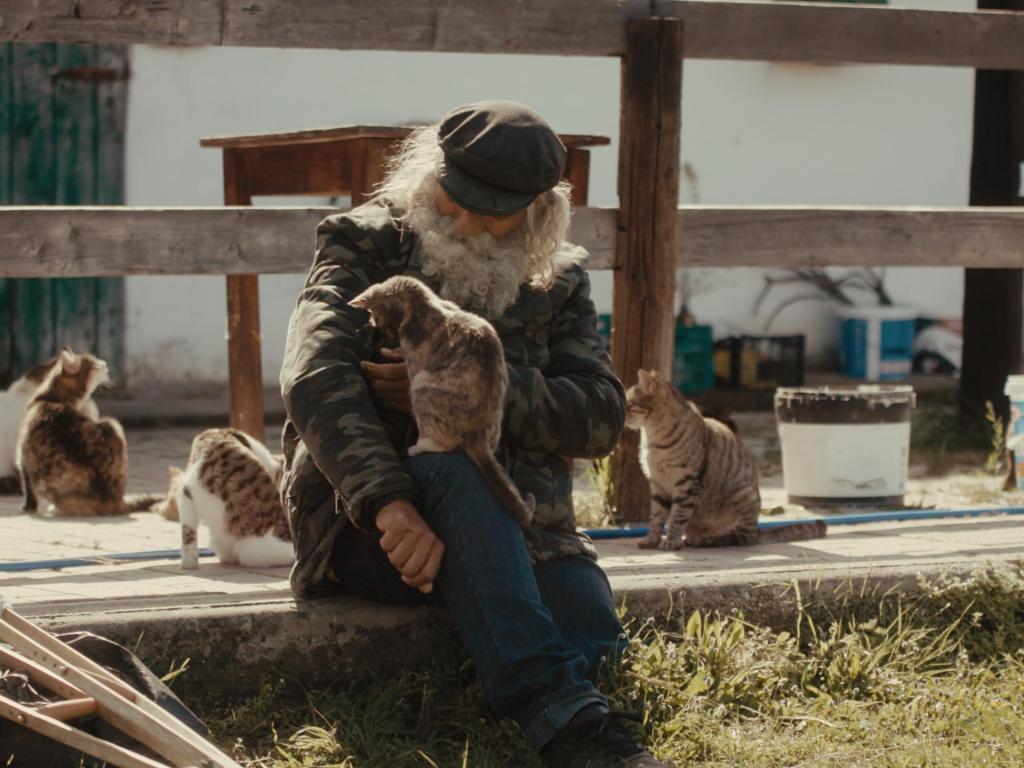
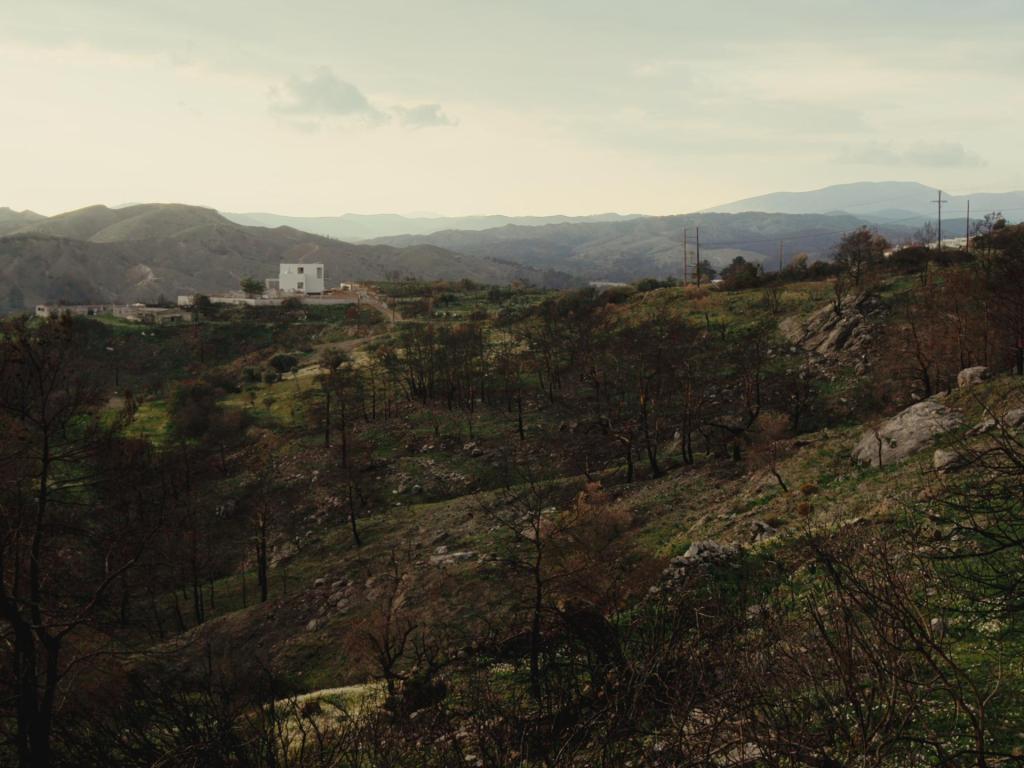
A big portion of the forest land that was burned were virgin forests as well as forest land that was burned during the ’80s and had already begun regenerating. Virgin forests take at least 70 to 80 years to regenerate. What that means is that in our lifetime we will not be able to see these forests again and we are going to live with a constant reminder of death for the rest of our lives. The loss is immense, the beauty, the natural resources, all the animals, the biodiversity and that is the true loss.
And of course, we depend on this beauty and our nature financially. A lot of the locals own fields and olive groves, and those who reside in the villages are directly impacted as the majority of them work in farming. We also depend on it for tourism, and partly, I hope that future visitors of the island will be able to acknowledge our loss.
In addition, a lot of businesses and homes were also burned and some people had to relocate from the villages to the city.
Unfortunately, we were not able to address all these topics but I am hoping to at least start a conversation.
Throughout the documentary, there is reference to the abandonment of animals, both domesticated and wildlife. Can you paint us a picture on the animal rights issue in Greece in the context of wildfire protection and more general?
When it comes to animal rights, Greece is very backwards. On the islands especially, we see a lot of working animals, like donkeys and horses that are constantly abused and exploited for profit. Again to serve a tourism industry. They are commodified and made to work under the heat carrying heavy loads as well as people. Not everyone sees that as cruelty; if anything they see it as fun and apply some sort of romanticisation to it. I think that alone says a lot about the culture.
Throughout the country, we constantly see instances of animal cruelty in our daily lives. Animal cruelty is very intense and there is little to no regard for how animals are living beings. There is little education when it comes to animal rights and a lot of people view animals as a commodity. Rescuers often find animals caged up, forced to stay in fields with no protection from the heat and the sun, animals hanged, tortured and poisoned.
I absolutely cannot understand it and it’s something that a lot of organizations are fighting against. There are organizations that operate on the island which are rescuing stray dogs and cats but they usually operate with minimal to no funding and rely on volunteer work.
The team that is featured in the documentary, LIBER LIFE, is a team that is relatively new on the island and it has a very clear political identity. It’s antispeciest collective that is also strongly vegan. They are doing absolutely incredible work, not only by rescuing animals but also by bringing perpetrators of animal cruelty to face legal consequences as well as by advocating against speciesism.
Within the context of natural disasters when it comes to wildlife protection, there is not much being done, and once again, unfortunately, it depends on the efforts of individuals, researchers,animal rescuers and forest guards to actually protect these animals. It is not only unfair to these people but it is also exhausting.
And we see it specifically in Rhodes. Even after the wildfires – and this is the conversations that is still taking place at the moment – despite the fact that we lost so many Dama Dama, which is a species of deer that in Greece only lives on the island and is considered wildlife, there were conversations from the regional government demanding the further depopulation of the animal. It is obscene. Apart from the Dama Dama being our local wildlife and a protected species, they are also our symbol. Our local government not only does not care about actually protecting them but also enforcing that idea that they need to be depopulated without mentioning the ways they are planning to enforce this depopulation. And the most disappointing thing about this is that a lot of locals actually agree to it for their own benefit, whatever that might be.
And as the climate crisis intensifies, we cannot ignore what that means for the wildlife and how wildlife is affected. Their natural habitats are destroyed and the animals are forced to go to villages and farms to find food and water. We are creating this problem for them and then blame them for trying to survive. And it goes without mention that wildlife should not come into contact with humans under any circumstance.
The second part of the documentary highlights the collective determination of the Rhodian community to protect their island. In your opinion, can collective and community self-organisation replace the responsibility of the State to protect and if yes, should they?
I don’t live in Greece anymore and I made a very conscious choice not to live in Greece. Unfortunately, Greek people live in a constant fear caused by corruption and state negligence, and we see it more and more often that people are forced to self organise and take collective action against the climate crisis. We see this not only in rural parts of the country but even in the capital where you would assume that there are more resources.
This is however a tricky question.
I believe that the state has a responsibility to protect citizens . At the same time, people in Greece know first hand that the state is not actually present and is not actively taking any measures to protect them from the climate crisis. So, in my opinion, self-organizing is now required by us because there’s nothing, nothing else, really.
I would like to imagine a world where we operate on a community level, and as the capitalist construct is currently collapsing very obviously around the world, I believe that it’s very important for us as communities and individuals living and working in these communities to find alternative ways of organizing.
But until then, the state is liable and governments should not rely on our collective work, name us heroes and face no legal consequences.
In Rhodes, the Greek state is liable for what happened. In Mandra, in Corfu, in Attica, in Evoia, in Matti, in Volos, everywhere, where natural disaster has taken place and the Greek state did not act, the Greek state is liable. It has been negligent, and we should demand that they are held liable.
What are the prevalent values you identify in these volunteer-led forest protection and firefighting communities initiatives, and what is the role of women and non-binary people in them?
Seeing a catastrophe of this scale taking place in front of your eyes, being in this extreme state of alert and seeing burned bodies of animals is a massive shock. The values that I identify within these volunteer led forest protection and firefighting community initiatives is definitely pure love for the place that we grew up in. And also a deep understanding of why we need to protect it. And the acknowledgement that we don’t only need to protect it for us and for our own wellbeing, but also for the animals that inhabit it.
In regard to how these initiatives are organised, during the wildfires, a lot of women adopted more traditional roles within the organising, meaning that most women focused on setting up shelters, organised food and first aid distribution, and worked as animal rescuers. There was definitely a divide in terms of gender, where the men would be firefighting and the women would be more active in organising roles.
For me as a woman, there was definitely a moment where I realised how dangerous firefighting was and when I decided to make myself useful in different ways. At the same time, a lot of women took a very active role in firefighting. I think a lot of us were acting on impulse and the roles we took depended on what was at stake for each of us.
What this experience taught us is that everyone was there for each other and people were not judging what you looked like, what your gender identity is, how old you are and how abled you are. We were all there and we were all working together. And no person, as far as I am aware of, thought of certain jobs as being less important than others.
And I think that for a lot of the teams that emerged after the wildfires, these values transcended into them as well. Or so I would like to think.
What is the wider message of the documentary, to be shared with communities worldwide, who might face similar experiences of wildfires, or other climate impacted weather conditions?
In order to answer this question, we have to take into account that Rhodes is a massive tourist destination. I think it is vital to connect the effects of the climate crisis with the interests of the tourism industry. As every place that heavily relies on tourism, we need to understand that we are all facing the same issues, which are the privatisation of the beaches and natural resources, disregard for the wildlife and the lives of the locals, and the commodification of culture and cultural expression.
What happened in Rhodes is not unique to Rhodes and is not unique to Greece. We saw it in Hawaii where not only a lot of people died, but property agencies rushed to buy property and profit from this disaster.
The message that I would like to share is that we are not afraid anymore and that organising on a community level is the way forward.
What has been the response to the documentary so far?
About a month ago, we held a private screening and invited a wide mix of people. Friends from Greece, friends from the island and a lot of friends that we’ve made here. Different age groups and different countries of origin.
As an immigrant, there is always self doubt when having conversations about Greece and community organising and how a British or international audience would relate to these topics or find them relevant. The reception of the film has been heartwarming and extremely positive so far. I was deeply moved by the comments from our audience and specifically when people said that it was refreshing seeing people organising on a grassroots level and seeing a story and efforts from the perspective of the people actually affected. There is genuine care and love that we have put in this film and I think that the people that have watched it so far were able to see this and understand us a little better.
Apart from this, we were nominated in the Student Royal Television Society Awards in the Unscripted Long-Form category and we are in the official selection of the Aigio International Short Film Festival “Theodoros Angelopoulos”. It is a great start to our festival journey and I could not be more grateful.
What are your plans for other documentaries or films in the near future?
I plan to do a Master’s degree in Documentary and Global Justice. Since graduating from my BA, I have started working in unscripted film and tv and would like to undertake investigative work. I would like to combine my studies with the next film that I would like to make which would be in regard to the privatisation of the beaches in Greece, which is a massive issue for the locals on the islands, and how communities are organising against this phenomenon.
Thank you!
Where can I watch it?
The film’s premiere in Greece is confirmed to be on June 17th, in the 2025 Aigio Film Festival
Read more on the film’s official page on Instagram
Connect with Areti Pagoulatou on Instagram.

 Secret Eclectic